OpenAI: A Stravus 8S operating‑model analysis
The Stravus Operating Model Series – Article 001
OpenAI is transitioning from frontier research lab to global AI infrastructure provider.
Recent developments, including its restructuring into a public benefit corporation and expanding enterprise partnerships, signal a company scaling at extraordinary velocity. At the same time, reporting around governance changes and internal alignment debates has intensified public scrutiny.
The question isn’t whether OpenAI is innovative. The question is whether its operating model is balanced.
1. The Issue
Over the past few months, OpenAI has taken a series of moves that increase its ability to commercialise and scale, while simultaneously raising questions about how strongly “mission/safety” is operationalised in day-to-day decisions.
The recent, widely-discussed flashpoints include:
OpenAI’s public benefit corporation (PBC) restructure (with a nonprofit foundation still overseeing, but with a for-profit engine designed to scale).
A major $200m Snowflake partnership to embed OpenAI models/agents directly into governed enterprise data environments (i.e., deep enterprise operating-model integration).
Reporting that OpenAI disbanded a “mission alignment” team, which amplified the “values drift” narrative.
Reuters reporting that the Pentagon is pushing AI companies (incl. OpenAI) to expand AI tooling onto classified networks with fewer restrictions - a high-trust, high-risk operating environment that intensifies scrutiny.
Net: OpenAI is increasingly behaving like critical infrastructure and like a hypergrowth platform company - and those two identities create operating-model tension. OpenAI is scaling capability at a pace that tests whether its organisational architecture can carry it.
This is precisely the kind of moment where operating models fracture - not because of incompetence, but because maturity across dimensions becomes uneven.
2. Stravus 8S Diagnostic Snapshot
Using the Stravus 8S Digital Readiness Model (as explained here), we assess OpenAI across eight equal dimensions of organisational maturity. Most commentary isolates a single theme:
“It’s a governance problem.”
“It’s a commercialisation problem.”
“It’s a mission drift problem.”
The Stravus 8S model does not allow that simplification.
Each S is equal. Each S interacts. Imbalance - not weakness - creates risk. Each dimension is assessed using the Stravus maturity model (as explained here).
A company can be Innovator-level in one dimension and Survivor-level in another. That is where structural stress accumulates.
Below is a diagnostic snapshot (not a moral judgement): what the signals imply about OpenAI’s operating model right now.
Systems: Transformer. Strong, OpenAI has built scalable deployment architecture, enterprise interfaces and API ecosystems that are shaping how other organisations operate. However, systemic governance integration (e.g., safety, regulatory workflows embedded directly into product architecture) appears still maturing. Transformer - not yet fully institutionalised Innovator.
Speed: Innovator. OpenAI’s velocity is market-defining. It sets tempo for the AI ecosystem. Release cycles, capability expansion and commercial integration indicate Innovator-level Speed. But Innovator Speed without balanced Stability and Synergy amplifies systemic tension.
Service: Enterprise partnerships and developer support ecosystems are structured and scalable. However, AI service in high-stakes domains requires deeply embedded trust frameworks - which are still evolving. Optimiser maturity.
Scale: Transformer. Capital access, global brand penetration and ecosystem embedding indicate strong Scale capability. Yet regulatory integration and geopolitical positioning will determine whether Scale becomes structurally durable. Transformer.
Synergy: Optimiser. Cross-functional coherence (research, policy, product, commercial) appears functional but under strain. Public narrative tensions suggest alignment mechanisms are not yet fully institutionalised. Optimiser - not fragmented, but not fully system-synchronised.
Stability: Optimiser. Operational reliability is strong. Institutional and reputational stability, however, is sensitive to governance perception and policy pressure. Optimiser.
Sense: Innovator. OpenAI is redefining how organisations interpret information and make decisions. It is shaping the “cognitive infrastructure” layer of enterprises. This is Innovator-level Sense.
Spirit: Transformer. The founding mission remains powerful and culturally embedded. But as commercial pressure increases, Spirit must evolve from belief to operating doctrine. Transformer - cohesive but under structural pressure.
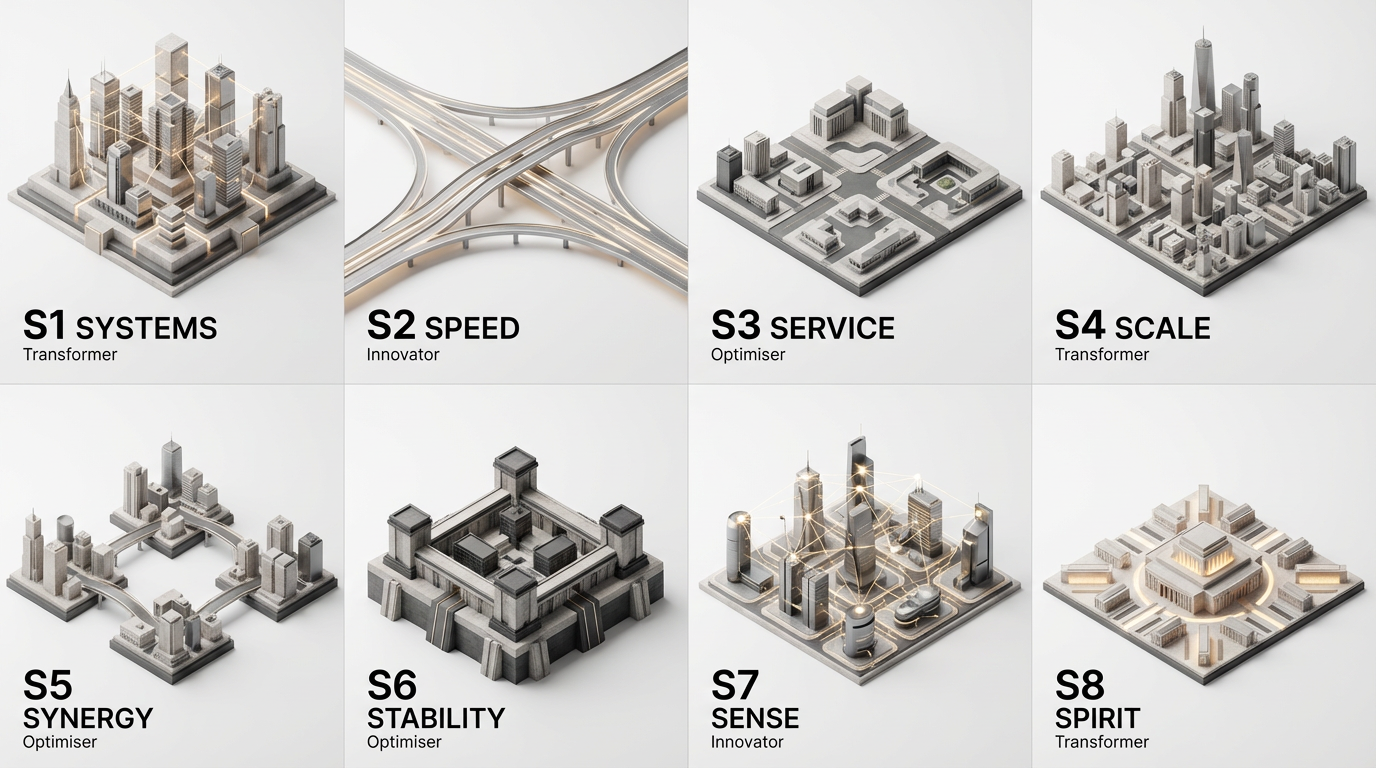
OpenAI - Stravus 8S model applied.
3) Maturity classification
We classify the overall OpenAI maturity as Late Transformer / Early Innovator with uneven maturity distribution.
The imbalance:
Systems and Sense are operating at frontier maturity.
Synergy and Stability lag relative to Speed and Scale.
Spirit is philosophically strong but structurally vulnerable.
This creates a familiar pattern in high-growth technology firms:
Capability outpaces coherence. The organisation is innovating faster than it is institutionalising.
In Stravus terms: OpenAI looks like a city with futuristic infrastructure in key districts - but where the trust and governance utilities (Stability/Spirit) have to keep up with the pace of expansion.
4) Stravus recommended pathway for OpenAI
The objective is not “more innovation.” It is maturity synchronisation.
The pathway must address the maturity gap between Innovator-level Speed/Sense and Optimiser-level Stability/Synergy/Service. OpenAI is already beyond “start-up stabilisation.” The next unlock isn’t “more capability”, it’s making trust scalable without throttling Speed.
Our proposed pathway is
Scale-Up Leapfrog → (Transformer ➜ Innovator stretch)
Our proposed pathway priority sequence is:
Step 1: Elevate Stability from Optimiser → Transformer
Institutional trust frameworks must evolve at the same maturity level as Speed.
Governance embedded into architecture
Transparent escalation protocols
Regulatory integration as operating design, not compliance layer
Without this, Speed creates systemic fragility.
Step 2: Strengthen Synergy to Transformer
Synchronise:
Research priorities
Safety governance
Commercial incentives
Public positioning
When Synergy lags Speed, narrative volatility increases.
Step 3: Institutionalise Spirit
Translate mission into explicit decision architecture:
Clear trade-off principles
Boundary conditions
Codified doctrine for high-risk deployments
Spirit must scale structurally, not rhetorically.
Step 4: Service Maturity Upgrade
As AI becomes embedded in enterprise and potentially sovereign infrastructure, Service must move from feature enablement to trust orchestration.
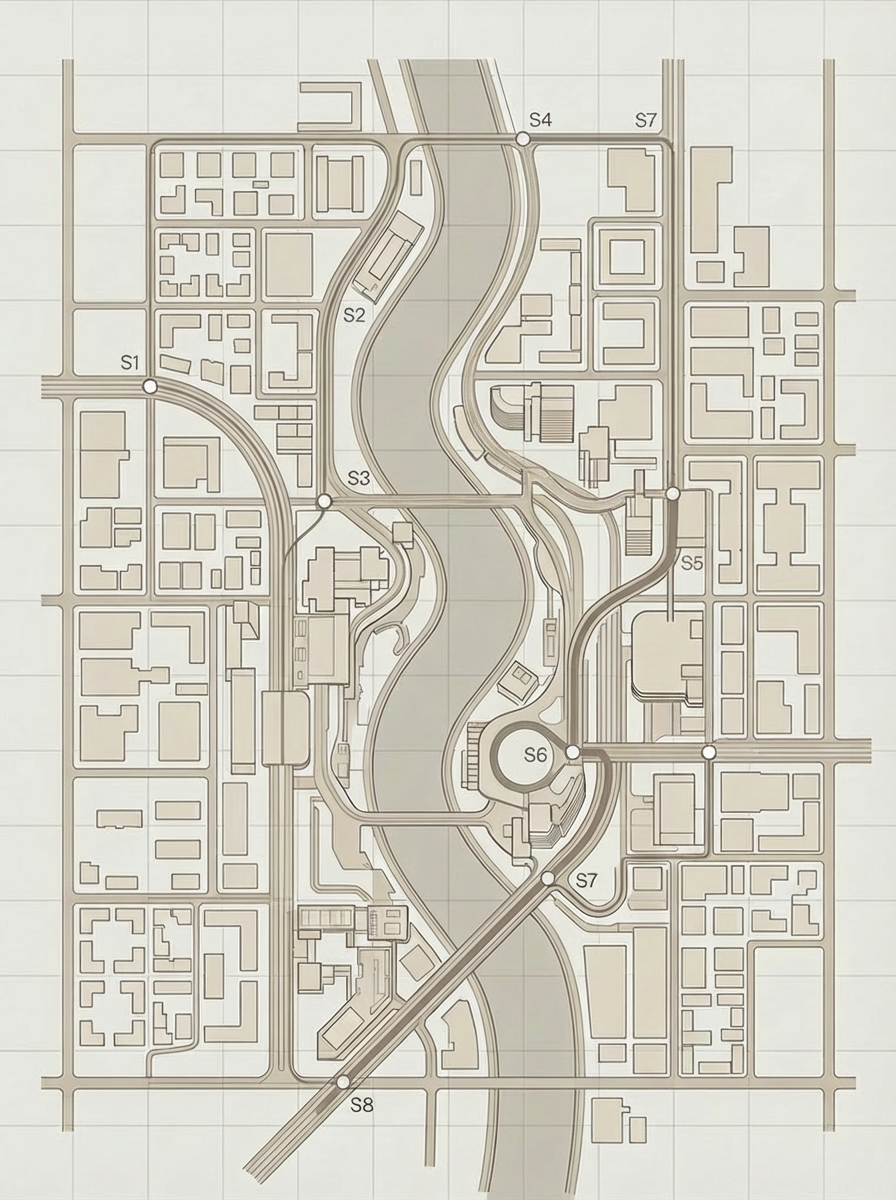
OpenAI - Stravus pathway recommendation.
Why This Case Matters
OpenAI is not just a company. It is a live case study in what happens when:
Frontier innovation meets institutional responsibility
Commercial acceleration meets global scrutiny
Speed exceeds structural synchronisation
The 8S model exists precisely for moments like this. It forces us to look at the whole system. Because transformation does not fail at the point of innovation. It fails at the point of imbalance.
If executed, OpenAI could shift from late Transformer to true Innovator maturity, not just technologically, but organisationally.